
AI is making some client relationships more time-consuming because it generates ideas faster than an agency can evaluate them. We’re seeing clients arrive with lengthy ChatGPT conversations, new feature requests, and confident claims about what their website should include, all of which require professional review.
For your agency, that creates a pricing and scope problem. In our Agency Action Show conversation with Toby Cryns, we also discussed a more productive approach: working alongside clients with AI instead of reviewing everything after the fact. The extra work often starts when a client forwards us a ChatGPT conversation, including the prompt they used, for review.
Key Takeaways
- AI-generated ideas can create extra agency work when clients expect suggestions to be reviewed or added to an agreed scope. Technical review and implementation need to be priced and scoped separately.
- Paid, time-limited workshops give clients a place to explore AI ideas with an agency and help everyone focus on the most important requests.
- AI can support website development and prepare sales information, but agencies still need professional judgment to assess the work and decide what fits.
- A working platform doesn’t guarantee customers or revenue. Owners still need to find customers, serve them, and manage the business after launch.
AI-generated ideas create real review work
Clients get interested in a subject, explore it with ChatGPT, and send us the conversation because they think it contains something useful. Their enthusiasm is understandable. However, reviewing that material takes time we haven’t necessarily included in the project.
We’ve received conversations that would take hours to examine properly. That makes us reconsider our agency rate and how we charge for this kind of review. Producing a document and evaluating whether its recommendations make sense are separate jobs.
Contracts need to stay understandable
Toby raised a related frustration: clients running contracts or deliverable lists through ChatGPT and returning with changes that add complexity without improving the agreement.
His development team uses the contract as a description of the work. Therefore, the document needs to make sense to the people building the project as well as the client purchasing it.
Extra legal language can get in the way of that purpose. We want a clear agreement about what we’re building. If an AI-assisted revision makes the scope harder to understand, it creates another round of interpretation before anyone can start work.
ChatGPT suggestions can become scope creep

We had an e-commerce client ask ChatGPT what else they should have requested for the price they were paying. The scope and contract were already settled. Nevertheless, the client returned with additional features and treated them as things we should include.
When we explained that those items fell outside the agreement, the response was that ChatGPT considered them basic.
That put us in a recurring argument about expectations that hadn’t existed during discovery. Our original meetings had been positive. The relationship became difficult after the client used AI to expand an already agreed project.
When AI calls a feature “basic,” the agency still has to determine whether the software supports it and whether the contract includes it.
We can discuss a new idea and quote the work. The problem starts when a suggestion becomes an assumed entitlement, without any connection to the original budget or agreement.
More planning can become a reason to delay selling
Another client wanted a sales CRM behind their website so two partners could track their sales activity. That was a reasonable request, and we could provide it.
Then came spreadsheets and documents describing custom dashboards, pipeline changes, and fields for potential leads and customers. When we asked how many leads they had ready to enter, the answer was none.
The business was designing a detailed sales process before it had customers to move through that process. Months had passed, yet the conversation kept returning to more tools.
Features can distract from the business goal
We wondered whether AI sometimes gives people an acceptable reason to postpone selling. Researching systems feels productive, especially when approaching customers feels uncomfortable.
Toby also pointed out that the motivation isn’t always avoidance. A client may fear missing out on value and keep adding features because they want to get everything right.
Either way, the business goal gets pushed aside. Sales depend on trust and the particular features a customer cares about, rather than the full list of things a product can do.
Our guitar comparison captured the problem: getting better requires practicing the guitar. Searching endlessly for the right equipment or sound doesn’t replace that work. Similarly, a more elaborate CRM doesn’t replace finding customers.
Polished AI research still needs a technical review
A three- or four-page document can make an idea look settled. ChatGPT may tell a client they’re right, the idea is excellent, and an existing plugin makes implementation easy.
The client then sends it over as research and expects us, as a professional agency, to carry it out.
In one example, we had to examine 15 proposed action items. Only three or four worked out of the box with the tools already available. The remaining requests needed further investigation, modifications, or custom development.
Evaluating each request involves technical troubleshooting to determine what already exists, what needs modification, and what requires custom development. We had to separate the requests into three practical categories:
- Some features already existed in the software and needed configuration.
- Others required CSS, code snippets, or smaller modifications.
- A larger request required a substantial custom add-on and a separate quote.
That review is technical work. The document’s confident wording doesn’t remove it.
It also creates an awkward commercial conversation. A client thinks they’ve identified something easy to add, while we’ve identified another development project. Asking a second AI tool for a different opinion wouldn’t settle that disagreement. We still have to apply our judgment and explain what the work involves.
Paid AI workshops can give client ideas a useful boundary
Toby described a different way to handle a client’s growing list of ideas. Through a paid quarterly check-in offering, he scheduled an hour to work with the client and Claude in real time.
The client wanted to explore a subsite within an existing website. Instead of asking for a document to review later, Toby opened Claude and worked through the idea during the call.
The one-hour boundary mattered. The client could suggest features, but the limited session encouraged them to start with the most important ones.
Collaboration can become part of the product
The session also helped the client understand how Toby used Claude. At the end, the client asked for the HTML file they had created, and Toby shared it so they could continue the discussion in another session.
We’re interested in AI-assisted agency workflows that give ideas a defined place in the service. A screen-share workshop lets the agency help shape and evaluate the work while the client participates.
That approach also connects to how we’re thinking about pricing AI-assisted agency services. Reviewing an open-ended pile of documents and running a paid working session are different offerings. As clients change how they explore ideas, our products may need to change too.
AI-assisted WordPress development needs direction

Our frustration with machine-generated client requests hasn’t stopped us from using AI in development. We’ve been working with WP Vibe and Claude, including connecting Claude to WordPress websites and directing redesign work.
One project involved a site with a CRM, LifterLMS, multiple courses, and multiple memberships. We gave the AI tools a clear prompt covering design priorities, look and feel, and page speed. The work also incorporated content from a related YouTube channel.
Performance belonged in that review alongside appearance. Google’s PageSpeed Insights documentation describes the performance measurement and improvement suggestions available through the tool.
Watching the process helps build understanding
Rather than leaving Claude running while we worked elsewhere, we stayed with it and watched what it was doing. Its notes and proposed options helped us understand the process and guide troubleshooting.
Our AI skills help us assess the options and decide which direction fits the site.
We’ve also been open about our limitations with graphic design. It’s one reason we’ve hired people with those skills. The technology gives us another way to explore design work, but we still have to judge the output and direct the next step.
Clients still need help choosing a direction
A person hearing that Claude can redesign a website may question the future of web developers. We understand that concern, but it doesn’t match the full range of help clients ask for.
Toby described a client who wanted to know whether an AI-assisted design looked “too AI.” The client could see the output. They still wanted a professional opinion about whether it was appropriate.
That’s part of the work we bring to a project: helping someone decide what to keep, what to change, and whether the result fits their business. We also need to communicate our professional assessment clearly.
Access to a tool doesn’t supply the background knowledge
When Claude presents options, we can draw on experience to choose among them. Someone without that foundation may follow a direction that doesn’t serve the site or understand why a feature isn’t working as expected.
There’s also the business owner who doesn’t want to open an AI tool at all. A plumber may want a working website without learning where to begin with prompts, design choices, and WordPress.
We expect our offerings to change. That could mean different packages or serving more small businesses rather than depending on a few large clients. However, we don’t see the need for help disappearing.
The broader challenge of building a sustainable WordPress agency remains: we have to identify work clients value and organize the business around delivering it.
Commission-based hiring carries an opportunity cost
Our discussion about AI led into a human staffing problem: hiring a salesperson on commission.
We hired someone who wanted an aggressive, performance-based arrangement. Success could produce substantial earnings for them; no results meant no commission. On paper, that limits the agency’s direct expense.
However, the calendar keeps moving while the business waits.
If we hand responsibility for sales to someone who doesn’t produce, we lose the progress we expected that person to make. Paying no commission doesn’t recover that missed opportunity.
The process and leads also matter
Toby raised another concern: a salesperson may control the process, infrastructure, or leads they generate, depending on the arrangement.
We’d need to know who acts as the manager and what the business owns if the relationship ends. A head of sales could define expectations for the process, lead ownership, and reporting before hiring begins.
We discussed whether an hourly wage with a smaller commission might work better. If a candidate’s AI skills justify a wage premium, junior roles could handle tasks such as research or follow-up. The right mix would depend on the job market and the agency’s management needs.
We didn’t settle on a universal answer. The choice involves both the cost of paying someone and the cost of waiting for results that don’t arrive.
AI can prepare sales information, but people carry it forward
We receive plenty of pitches claiming AI can handle sales and generate extraordinary revenue. We’re skeptical. If a system reliably produced that outcome without much effort, selling access to it would be an odd priority.
The more credible uses involve repeatable tasks that computers can perform: collecting information, putting it into a spreadsheet, and preparing an analysis for a salesperson to review.
Toby described the difficulty even within that narrower role. As a WordPress agency, his team first needs to decide which businesses to investigate. A lead-generation service such as Apollo.io might help produce a starting list.
For example, a search could seek 1,000 WordPress business websites in the Midwest. That supports data collection, but list size alone doesn’t show whether automation helps with a repetitive task.
A manager or head of sales can review the collected data and judge whether automation is helping. Useful AI metrics should track qualified opportunities and close rate, not just list size.
The more valuable human work is assessing fit and deciding how to approach each business. AI may support that review, but it doesn’t automatically carry the relationship forward.
Our view is that B2B relationships depend on personal connection. Automated email may have a role, but we don’t see it replacing the human work of earning trust.
More outreach doesn’t guarantee better leads
The volume of cold email and LinkedIn messages raises another concern. We receive so much spam that it can make an otherwise useful network feel difficult to use.
During our time in corporate learning and development, we received unsolicited sales messages without scheduling calls with those senders. Yet the outreach continued.
We discussed the arithmetic behind it: if a campaign sends 10,000 messages and gets two calls, the people running it may consider that enough to continue. Tracking the close rate and other relevant metrics gives a clearer picture than message volume alone.
Toby challenged whether those numbers show sustainable success. A lower-level salesperson may get credit for responses or booked calls while the person receiving those calls considers them poor opportunities. The response becomes another request for more volume.
Existing leads may deserve more attention
We see a related issue in powersports training. A dealer asks for more leads, but a review of the last 100 shows that the team contacted only 30.
The remaining 70 aren’t confirmed invalid calls if no one contacted them. A root cause summary could help identify why prospects weren’t reached or qualified. Any call recording or data review should have informed consent.
Calling the others “junk” doesn’t explain how anyone reached that conclusion without speaking to them.
Agencies face their own version of this problem. We may reject prospects after a quick website review, even though those judgments can be arbitrary. At the same time, reviewing every possibility consumes time.
Following up with existing prospects may be more valuable than repeating a high-volume outreach campaign as a repetitive task. We have to protect our time without casually discarding a lead that could become a substantial project.
A website that looks unsuitable at first glance might still represent a $50,000 opportunity. We don’t have a simple formula that resolves that tension.
Memberships, courses, and stores require active owners
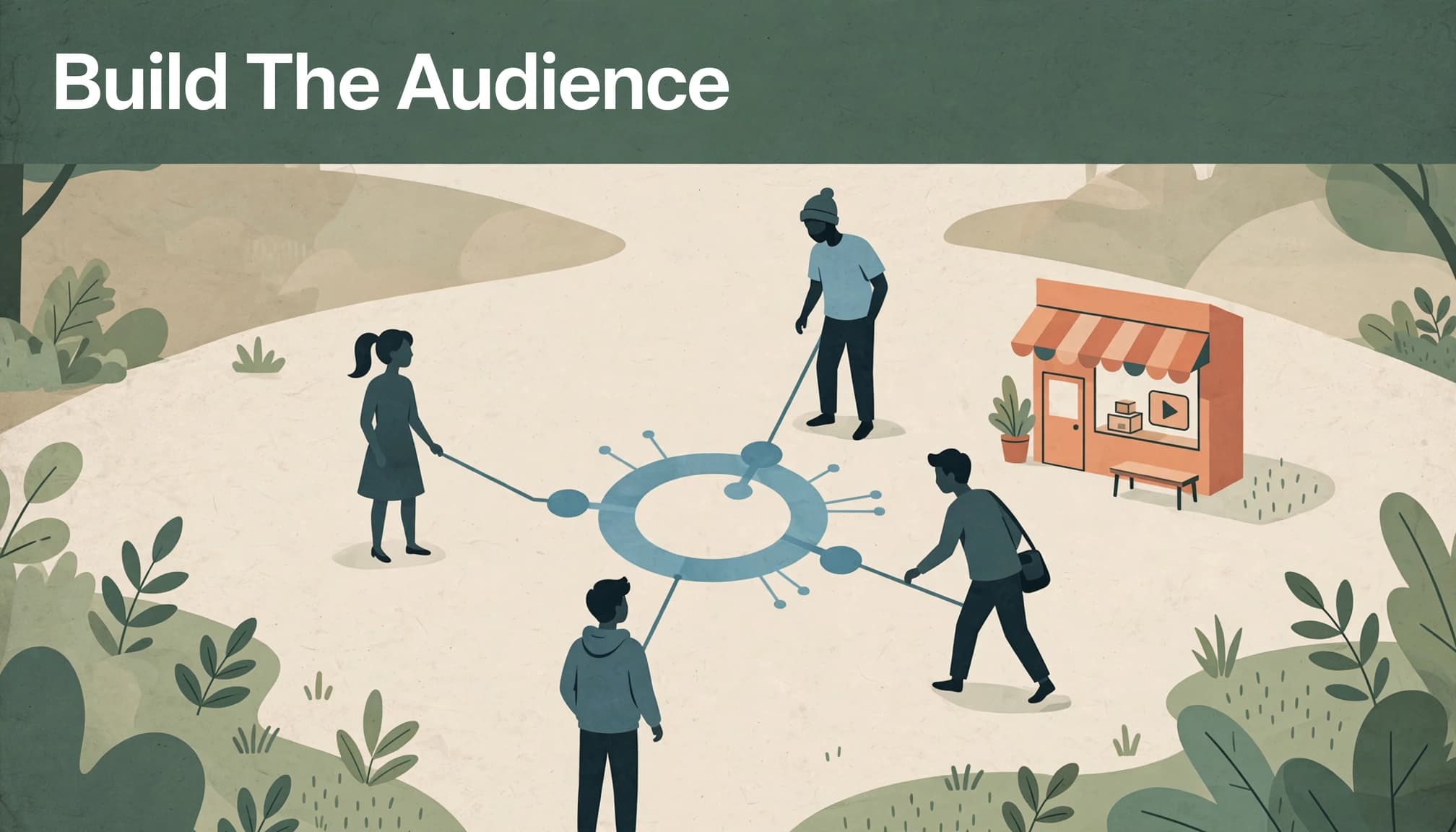
We’ve both earned a living building memberships, courses, and e-commerce sites. Still, we questioned whether the boom in those projects had ended, or whether the promise of easy success had always been exaggerated.
Our view is that these businesses can work. The successful ones have owners investing time, energy, and money in the work, including customer service and sales.
Toby described a membership product he believed had strong potential. The platform functioned, but the owners weren’t investing in it or selling it. The quality of the build couldn’t compensate for that.
We also described an e-commerce client who didn’t want customer emails or a phone number on the site. Their expectations resembled the hands-off income promises that circulate online.
Recurring revenue still comes with responsibilities
A membership payment can recur. The owner’s responsibilities continue too.
Our work with WordPress eLearning and course platforms gives us the technical side of that equation. Yet a platform with courses, access controls, and payment options still needs someone to attract and serve customers.
We don’t believe owning a business removes the need to work in the business. Building a store doesn’t guarantee purchases, and launching a course doesn’t guarantee students.
An empty community needs its first members
One business networking group expected its new membership site to attract users through cold LinkedIn outreach. Members would arrive, volunteers would moderate groups, and those moderators would help grow the community.
The proposed price was $40 per month.
We asked how they expected to get the first 100 users. Those users didn’t even have to pay at the beginning. The immediate problem was finding enough people to give the site activity and character.
An empty community doesn’t offer the same experience as one where people already participate. Nevertheless, the plan depended on people arriving, volunteering, and paying after launch.
Early participation gives the next members something to see
We discussed the value of building evidence from the first paying users. If ten people were getting value, responsive customer service could give them a reason to stay. Their video testimonials could help explain why someone else should join.
That still requires the owner to get the project started.
Paid entrepreneurial groups provide a counterexample to the idea that memberships cannot succeed. Toby had been looking at one such organization and could see that people were paying to participate. The model was possible; the difficult part was building and selling an offer people wanted.
A functioning platform establishes the opportunity to do that work. It doesn’t perform the work on the owner’s behalf.
Discovery needs questions about revenue and audience
At Manana No Mas!, we’re direct during discovery for memberships and similar projects. We communicate the audience and financial risks, and want to understand where users will come from before we start building.
The questions include:
- Do you already have a list of potential users?
- Are you part of an existing audience or community that could support the project?
- Where will the first members or customers come from?
- How will revenue repay the investment in the platform?
We can build what a client wants, but the work has a cost. The client needs a credible path toward recovering that investment.
Sometimes the answers reveal that the plan amounts to launching and hoping people arrive. In those cases, we may suggest waiting or developing the audience first.
Clients can still choose to proceed because they’ve dreamed about the project for years. We’ve seen that happen, and we’ve also watched the expected activity fail to materialize.
The owner’s choices remain part of the outcome
We also acknowledged the uncertainty in business decisions. Sometimes we see an idea with traction and believe a particular path could work. The owner chooses another direction, and the business fails.
That doesn’t prove our preferred path would have succeeded.
It does reinforce how much depends on the person running the business. The platform, the offer, the owner’s decisions, and the owner’s ongoing management after launch all matter. Technical feasibility alone can’t tell us whether the business will work.
The next questions extend beyond client requests
Our conversation also set up a future discussion about plugin developers: whether they’re growing, shrinking, maintaining their businesses, or diversifying.
Katie Keith’s public comments about plugin sales and expansion into Shopify prompted several possible explanations to examine. We discussed weaker WordPress demand, the saturation of lifetime deals, and AI-assisted plugin building as questions for a future show, rather than settled conclusions.
Other proposed topics included whether WordPress security creates too much risk for small agencies and whether some agencies make a deliberate choice not to grow.
We also raised the possibility that clients’ opinions of agency quality could matter more than AI itself. That led to questions about charging for responsibility and about a client’s marketing department becoming an agency’s competitor.
Those topics connect to the work we’re doing now. Toby’s practice, The Mighty Mo, includes WordPress design and development, AI-assisted website and app development, and search-related services. Here at Manana No Mas!, we’re working through the same changes in how clients buy, plan, and operate their platforms.
Frequently Asked Questions
How can AI make client projects harder for agencies?
Clients may bring AI-generated research, feature requests, or contract changes and expect the agency to act on them. Reviewing the material takes time, and suggestions can create scope disputes when clients treat them as included work.
Should an agency build every feature suggested by ChatGPT?
No. The agency needs to check whether each feature already exists, needs modification, or requires custom development. The agency should explain the work and quote additional development when it falls outside the agreement.
How can agencies work with clients on AI-generated ideas?
A paid, time-limited workshop lets the agency and client examine ideas together and prioritize the most important ones. This gives the work a defined place in the service instead of leaving the agency to review an open-ended set of documents later.
Does launching a membership site or online store guarantee revenue?
No. A functioning platform provides a way to sell, but the owner still needs to attract and serve customers. Discovery should cover the audience, the source of the first users, and how revenue could repay the platform investment.
Agency value includes the decisions around the build
AI can make working with clients harder when every generated suggestion arrives as an assumed requirement. We’re seeing the review, scope, and expectation-setting work that follows.
We’re also finding useful ways to collaborate with clients and direct AI-assisted development. Our professional judgment remains part of what clients need, even when they have access to the same tools.
A working website still needs a business behind it. The agency can help build and guide the platform, but the owner still has to find customers and do the work of serving them.