Section Heading
When is it a Book?
I think back to early 2006. I think about the sleep I wasn't getting, with concepts of the automotive business swirling in my brain. I think of the job that I was doing, almost 70 hours a week, and how much I disagreed with some of the daily processes. For years coworkers and others tried…

Kurt von Ahnen
CEO
I think back to early 2006. I think about the sleep I wasn’t getting, with concepts of the automotive business swirling in my brain. I think of the job that I was doing, almost 70 hours a week, and how much I disagreed with some of the daily processes. For years coworkers and others tried to motivate me to write it down- to write a book. This was not a new idea. This is something I can remember Speaking of as early as third grade.
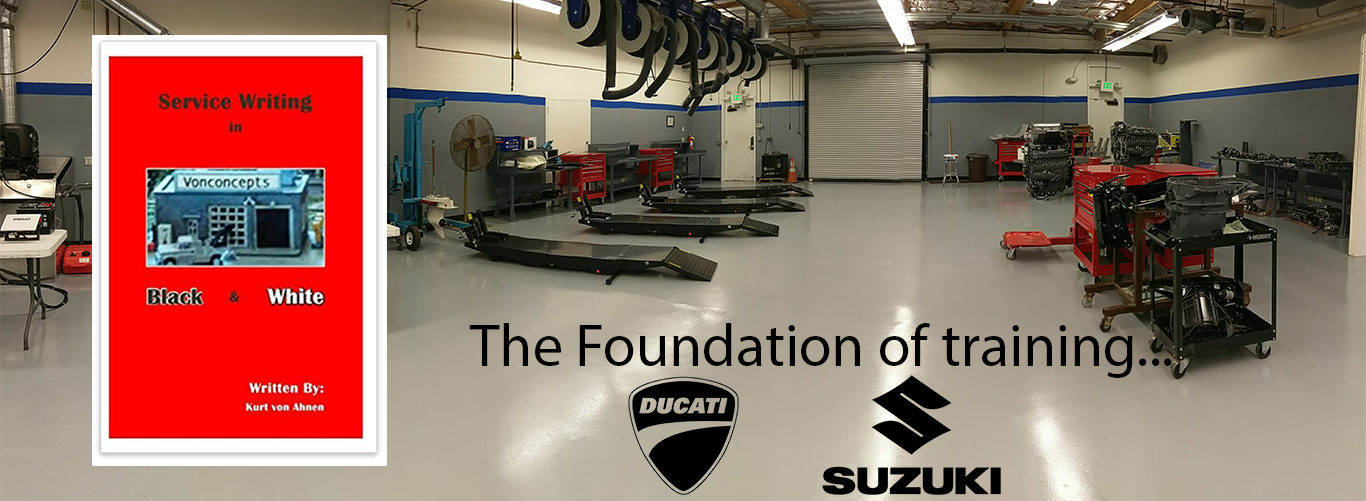
In 2007, I had finally released my first book, Service Writing in Black and White. To be honest, I didn’t get the book to sell at all. In fact, to relieve my brain of all those thoughts, this was just an exercise. I listed the book on the Internet and soon small orders were being placed country and around the world.
The sales weren’t many, but it was still a confirmation of my inspiration to write the book in the first place. The biggest side effect in authoring your own book is the instant recognition of becoming an expert. This small industry trade book ended up launching my career as a corporate trainer in the power sports industry. In that position, I found myself writing many more works but under the name of my employers.
I will have another series of posts on the benefits of publishing
Now an independent worker once again, I have found myself creating content at a whirlwind pace: Courses, Posts, Articles, and videos. So the question begs, when does all this content lead to another book? I’d like to take this moment to inspire anyone reading this that you too can write a book.
What I do is outline my similar concepts in the order of progressed thought. I try to use the titles of chapters to describe those thoughts, then use the outline structure to break out the main thoughts of each chapter title. If those main thoughts of each chapter title can fill a few pages without duplicating the main thoughts of other chapters, you are off to a great start.

Now that you’ve got that much done, try to set your mind as a new reader and look at your outline from top to bottom. Does it make sense? Do you think the concept flows and has the possibility to add value to others? If you can answer yes those two questions, you are at the next step.
The next thing that I do personally, take each title name a new section within a workbook in OneNote. If you were to look at my OneNote account I think most would be shocked at how much stuff I’ve thrown at the wall to see if it would stick. OneNote, to me, Keep my is a wonderful virtual way to keep my thoughts and ideas long after I’ve forgotten about them. Something that might not align today may find alignment two years from now so it’s great to keep a record of your thoughts.
Each of these sections can now start to be built out as a chapter in narrative form, using the outline to guide the text. Keeping the outline active on the side keeps you from blending or duplicating your narrative. this system is also very handy as it syncs with all of your devices, giving you the ability to make additions and notes on the fly, we can add pictures and photos as you feel inspired in your daily walk.
The title of this article is “When is it a Book?”. Your work becomes a book when you formalize it. Tons of authors have tons of assets like my OneNote, but few have pushed the magic button to make it public and promote it. If you can assemble six more concepts that are related but not duplicated into a narrative form, you have the beginnings of a book. If you follow my steps and review the process as you go, you will have something you can share with somebody else.
My advice at this stage before you go to publishing is to find somebody and share your work. What you are looking for in that somebody is a person that has your back, but also later. You want their feedback for the concept, but you also want somebody smart enough to point out your errors. And don’t worry, there will be many. Publishers call this the four-eye principle. Having others confirm your work adds to your confidence and gives you a better product.
So where did the idea for this article come from today? Well, I am back in the process and putting together another book to publish. I sampled the concept through Social Media posts and determined it was worthy of the process. Stay tuned.